
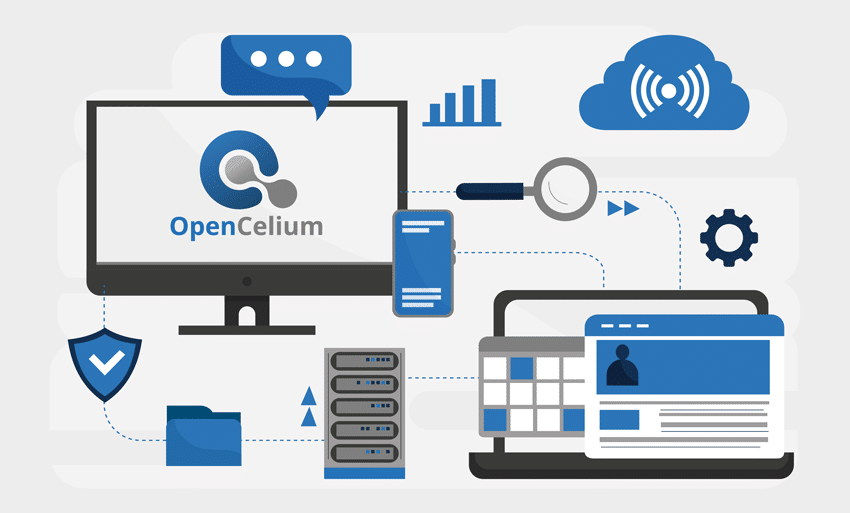
The central problem often remains unresolved: many of these systems exist side by side, but not in conjunction with one another. Information is fragmented, dependencies are unclear, and processes are heavily manual. This is precisely where the intelligent networking of IT systems becomes the decisive success factor.
Why pure tool landscapes are not enough
In practice, this leads to IT teams spending a lot of time on manual coordination: information has to be gathered from different systems, dependencies checked manually, and decisions made based on incomplete data. Especially in critical situations such as incidents or major outages, this fragmentation negatively impacts response times and service quality.
Companies therefore need a central integration layer that connects systems, contextualizes information and automates processes – regardless of the toolset used.
OpenCelium as a central API integration platform
Instead of isolated point-to-point integrations, OpenCelium offers:
The OpenCelium concept is complemented by two key components: connectors and business templates, which significantly simplify and accelerate integrations.
Connectors and Business Templates
Business templates represent pre-configured integration scenarios for various use cases. Each business template describes a specific connection between two applications and contains all the necessary definitions for source and target systems, as well as the associated mappings and rules. These templates enable the rapid implementation of proven integration solutions, reduce configuration effort, and ensure consistent, traceable processes.
The integration layer as a strategic architectural component
The clear separation of business logic and integration logic prevents systems from becoming interdependent. Changes in one tool—such as an update or a system migration—can be handled without jeopardizing existing processes. This significantly increases the stability of the overall architecture.
At the same time, OpenCelium enables standardized integration of new systems. APIs, events, and data models are managed centrally, ensuring that integrations remain consistent, traceable, and maintainable.
The role of the CMDB in a networked IT system
In an integrated architecture, the CMDB provides:
Consider monitoring in the right context
By integrating monitoring systems via OpenCelium, events can be:
• Automatically link to affected systems or services
• Prioritize based on dependencies
• Escalate selectively
This transforms a technical alarm into actionable information.
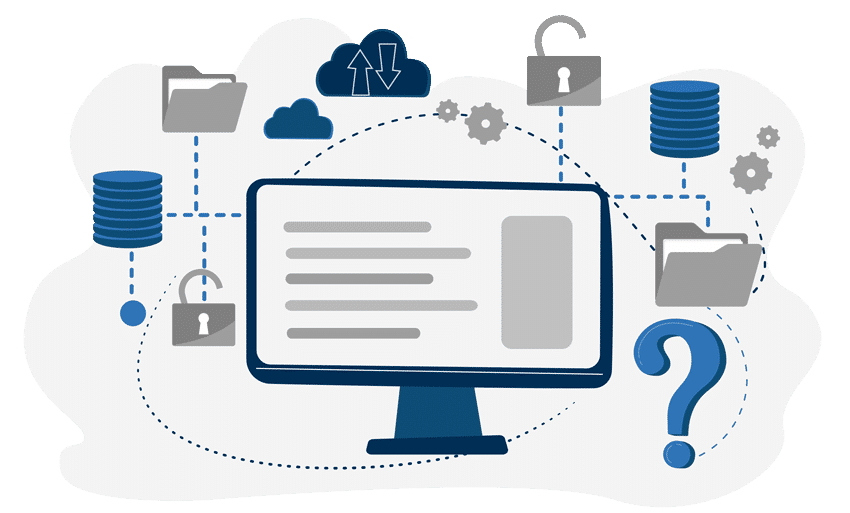
End-to-end processes across system boundaries
A typical process might look like this:
1. Monitoring detects a fault
2. OpenCelium analyzes the event
3. Contextual information from the CMDB is added
4. A ticket is automatically created or enriched
5. Relevant stakeholders are informed
This automation reduces manual tasks, shortens response times and sustainably increases service quality.
Governance and control
All data flows, events, and process steps are centrally traceable. Changes can be versioned, documented, and rolled out in a controlled manner. This results in high operational reliability and compliance – especially in regulated environments.

Security as part of integration
This includes:
Transparency as a basis for better decisions
Companies benefit from, among other things:
Scalability and sustainability
Thanks to its modular architecture, clear interfaces and high automation capability, the platform can be flexibly expanded without destabilizing existing integrations.
Extended architectural principles of modern integration platforms
OpenCelium follows clear architectural principles such as loose coupling, event-driven design, and reusability. Systems do not communicate directly with each other, but rather via defined interfaces and processes. This prevents changes in one system from having uncontrolled effects on other components.
A key aspect is the decoupling of data flows and business logic. Business decisions are not implemented in individual tools, but orchestrated centrally. This creates consistency, reduces redundancies, and significantly simplifies maintenance.
Conclusion: Intelligent IT networking as a success factor
OpenCelium offers a powerful IT integration platform that connects systems, automates processes and creates context – independent of individual tools.
OpenCelium vernetzt IT-Systeme intelligent und macht komplexe IT-Landschaften beherrschbar.
OpenCelium Fact Sheet
The most important information at a glance

becon blog
CONTACT
Get in touch with us!
Do you have any questions, suggestions, requests or are you facing a particular challenge? We look forward to hearing from you!